

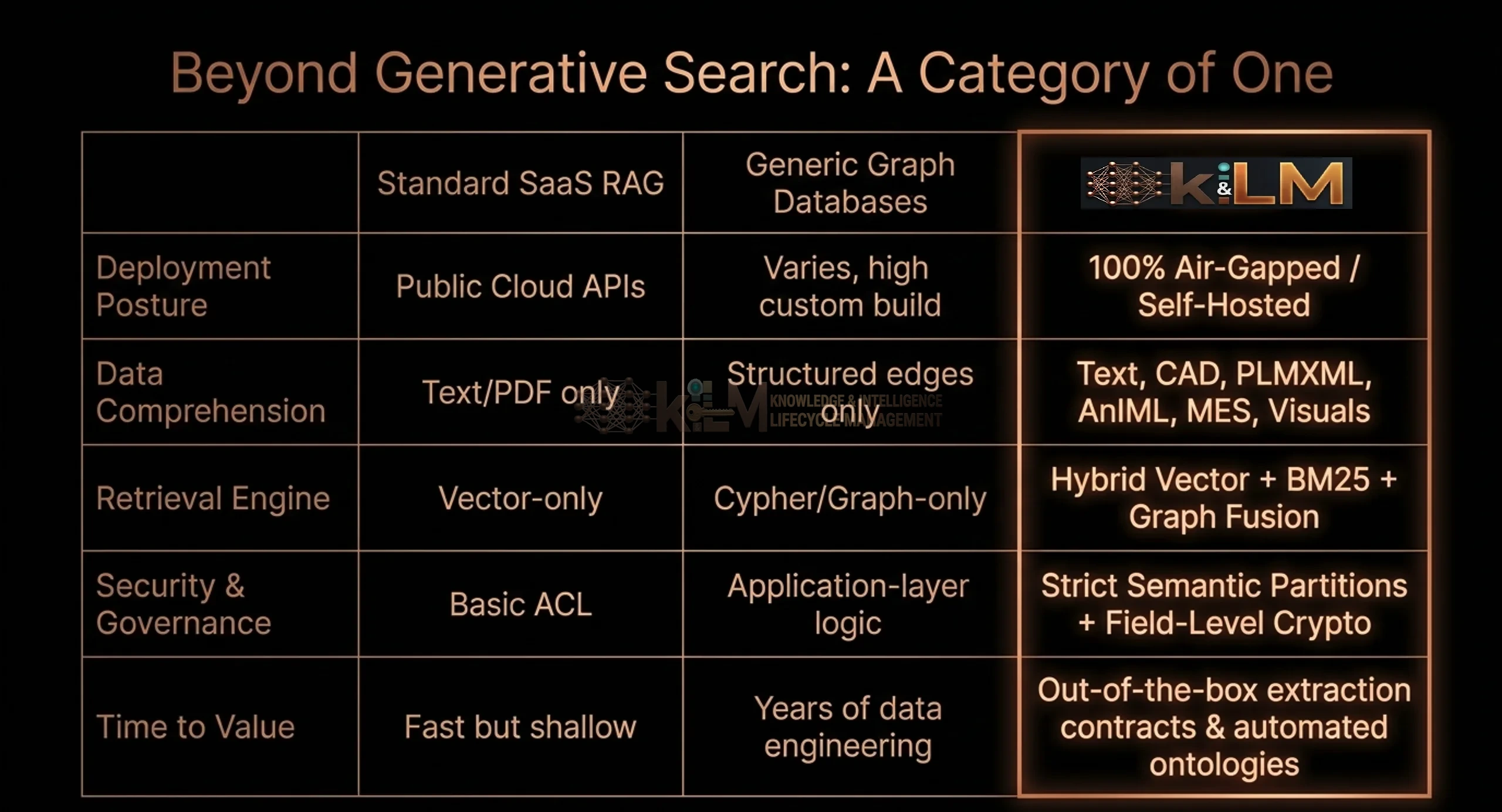
Introducing

a Sovereign & Neurosymbolic

EI (Enterprise Intelligence) Platform ~ Your Data, Your LLM & Your Intellectual Property! ~
kiLM

kiLM

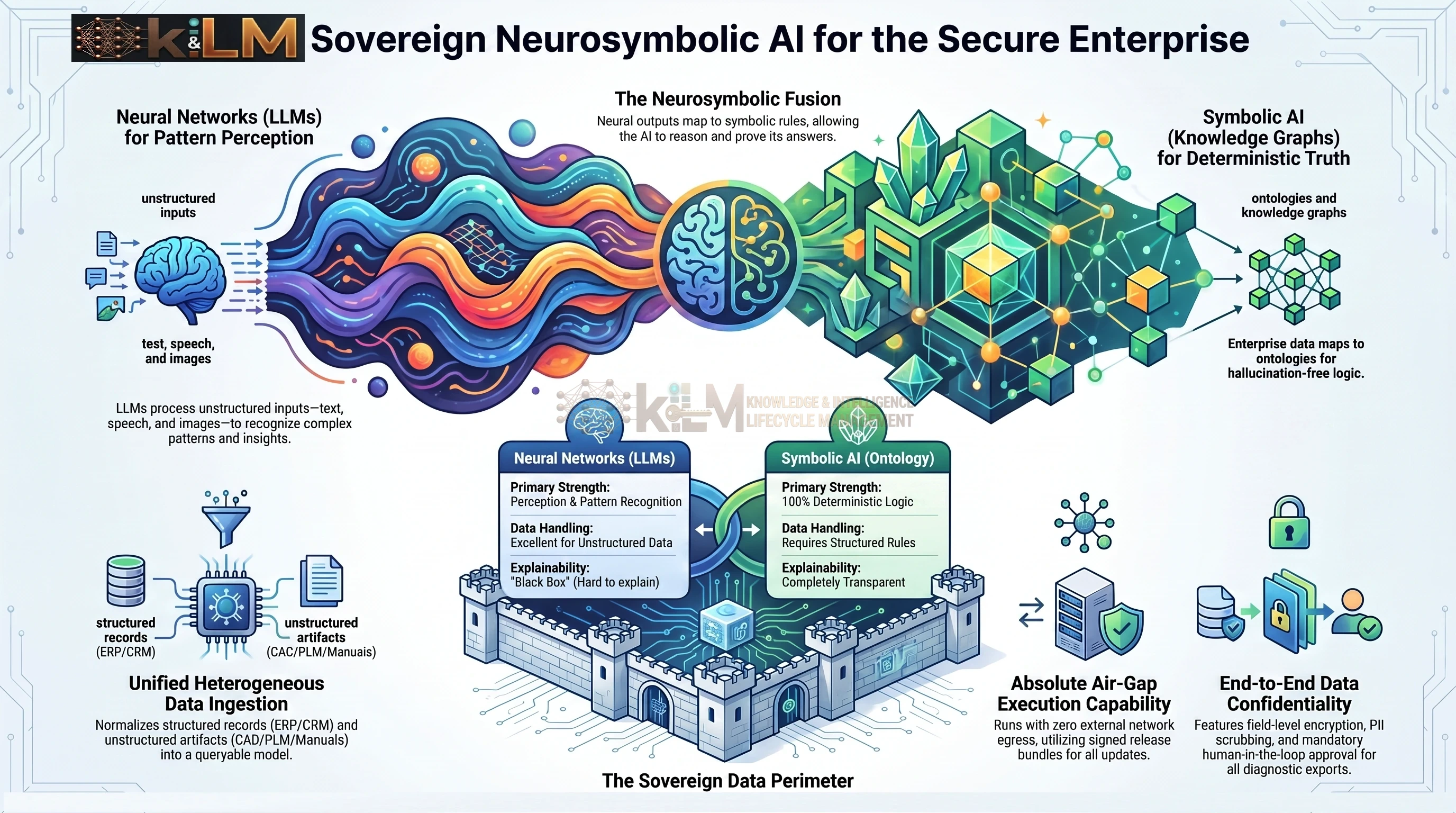
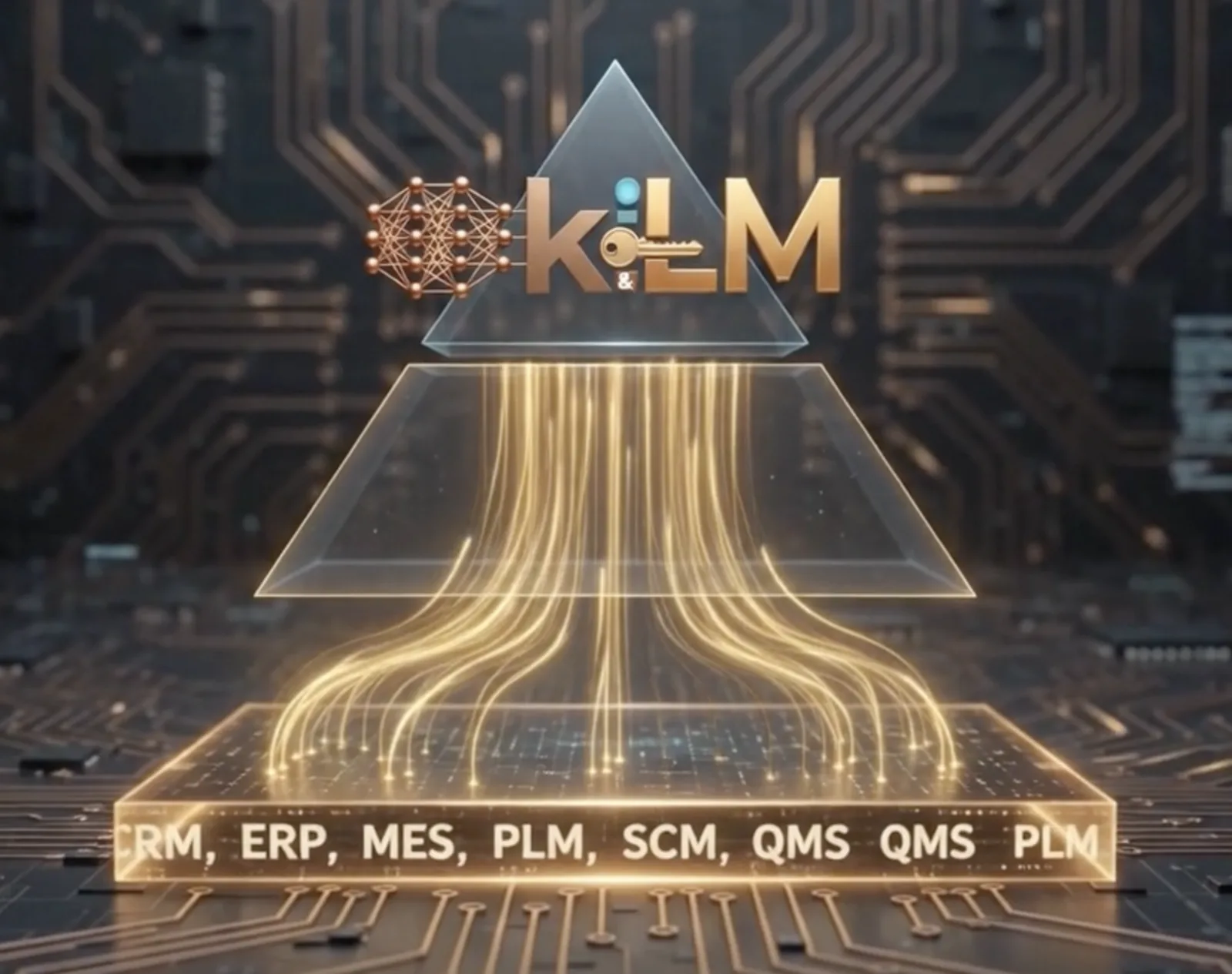
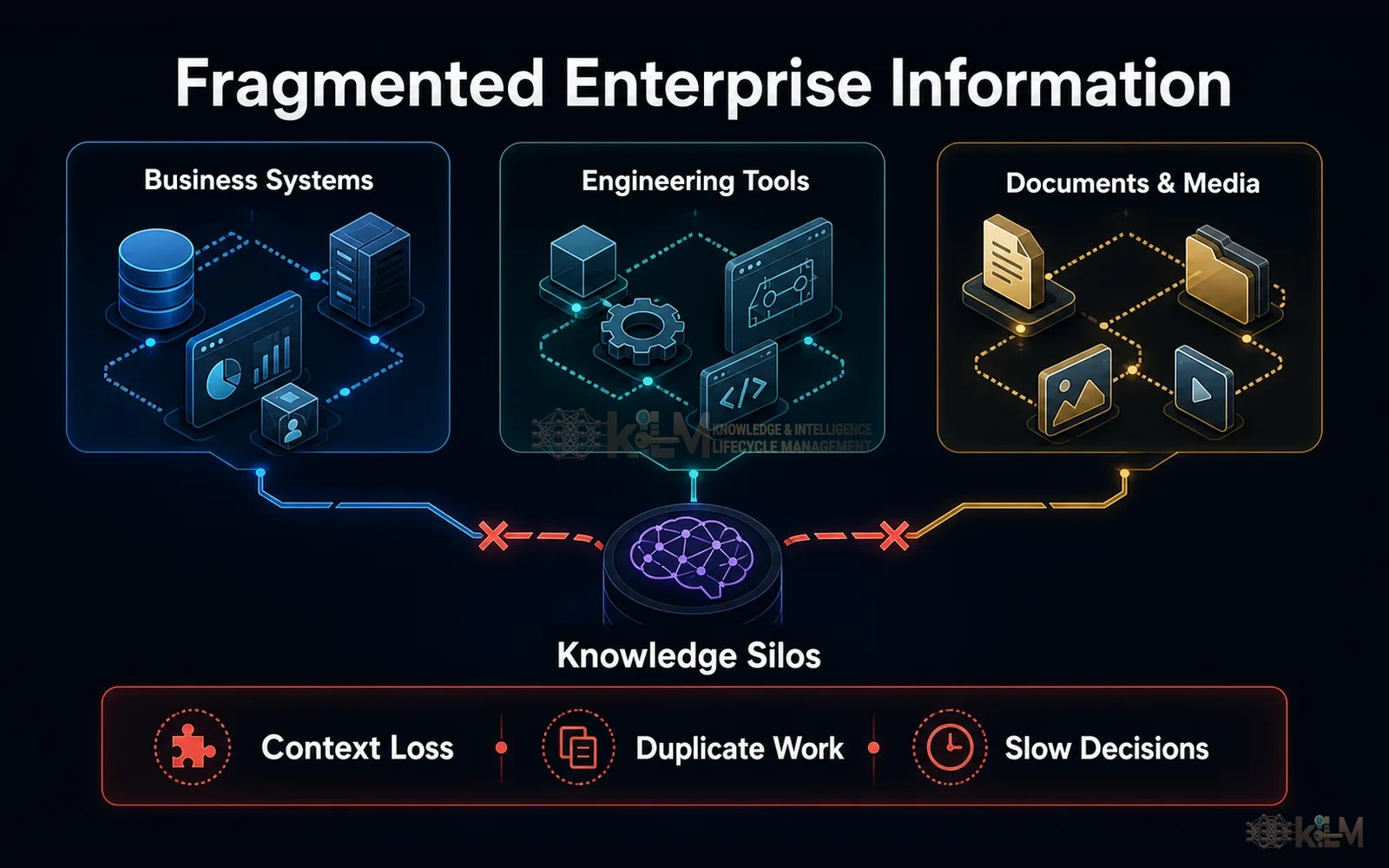
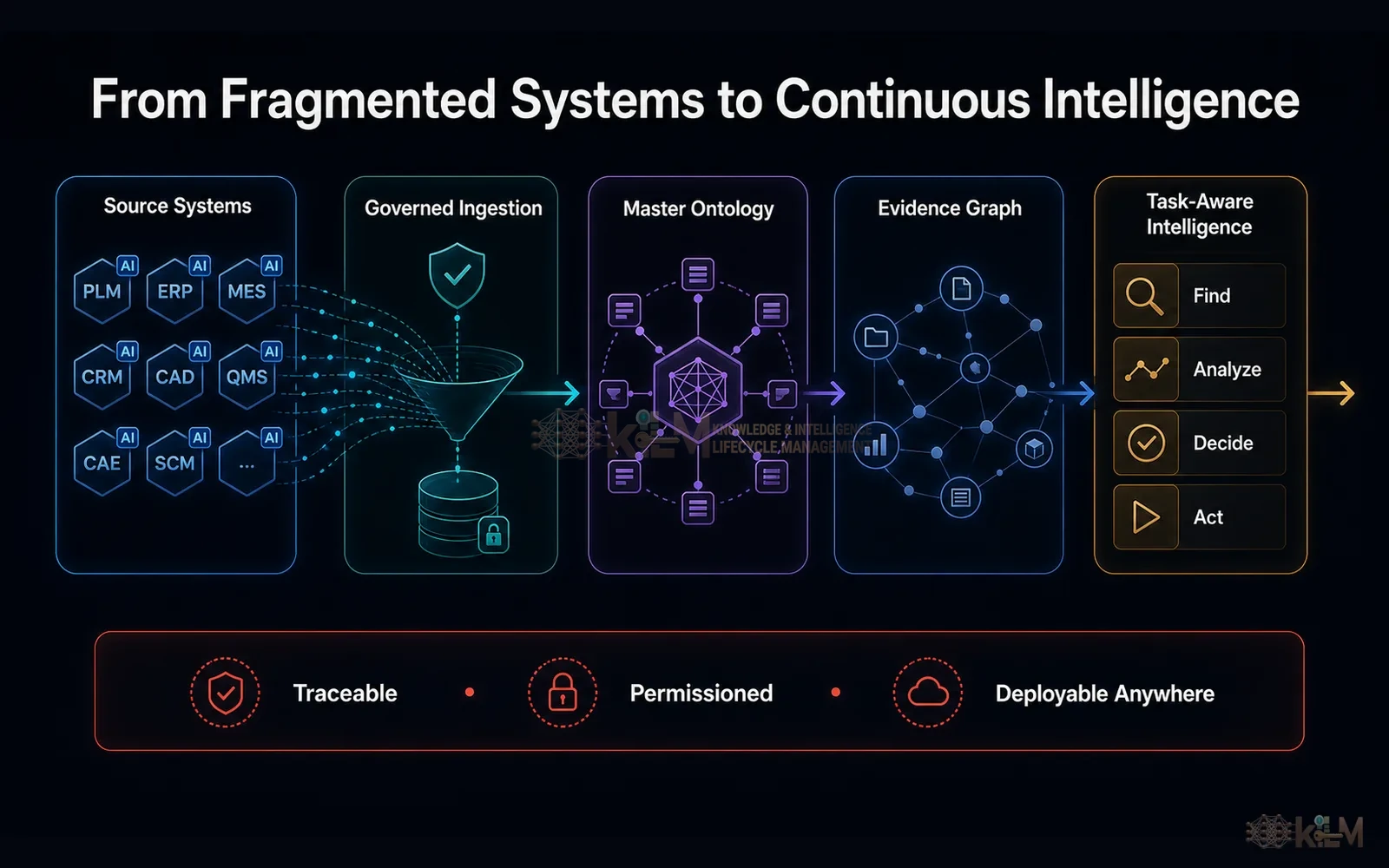
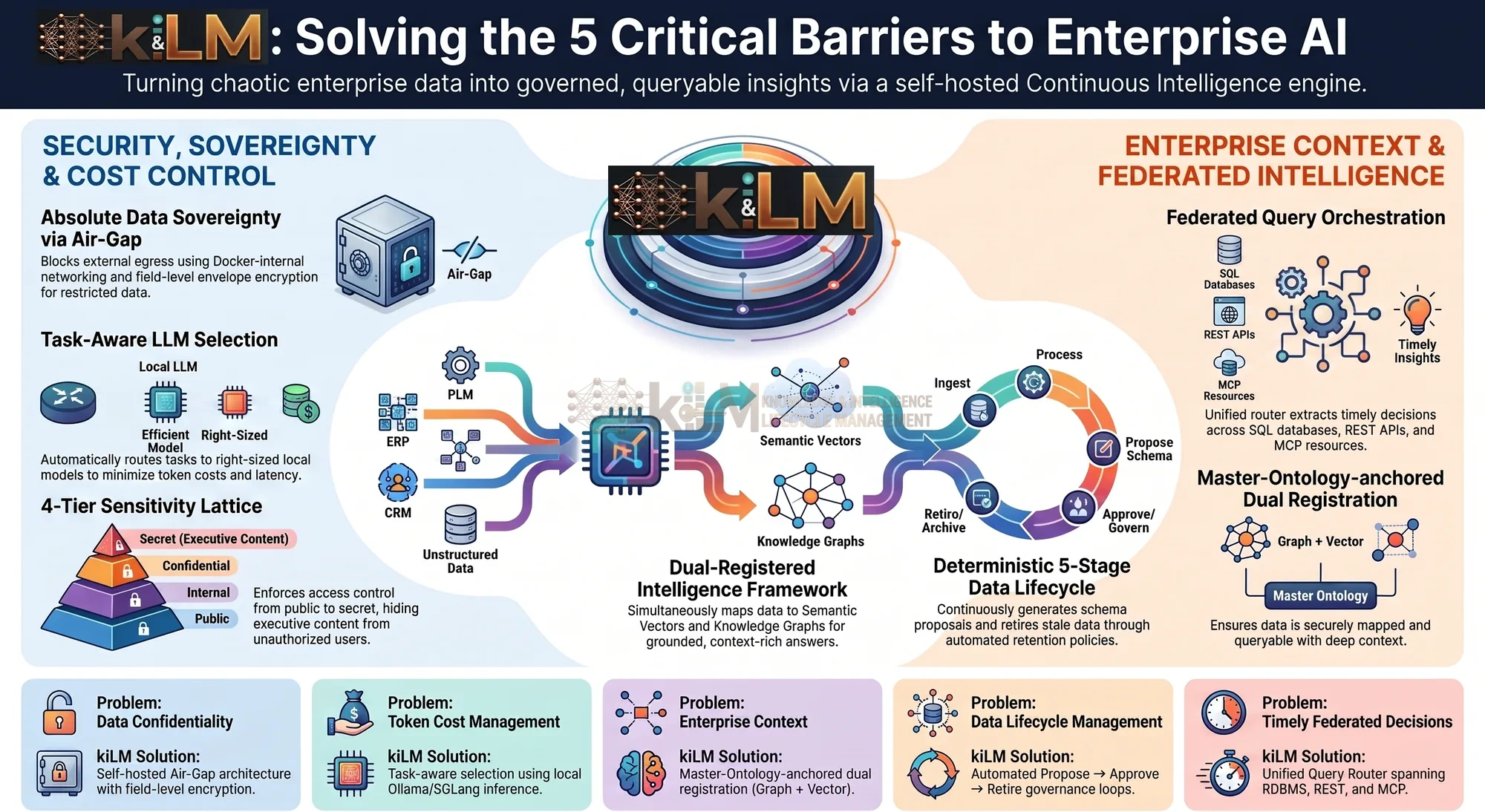
Turn Fragmented Enterprise Data into Decisions you can Verify. kiLM is an Evidence-backed Enterprise Intelligence (EI) Platform — a Sovereign & Neurosymbolic platform that connects Documents, Engineering Tools / Systems and Manufacturing & Operational Data into a Traceable Evidence Graph, and delivers Grounded Answers, Change-Impact Analysis, Compliance Advisories and Approval-Ready Workflows inside your Dedicated Environment.

Airgap-Ready Built for self-hosted and regulated environments
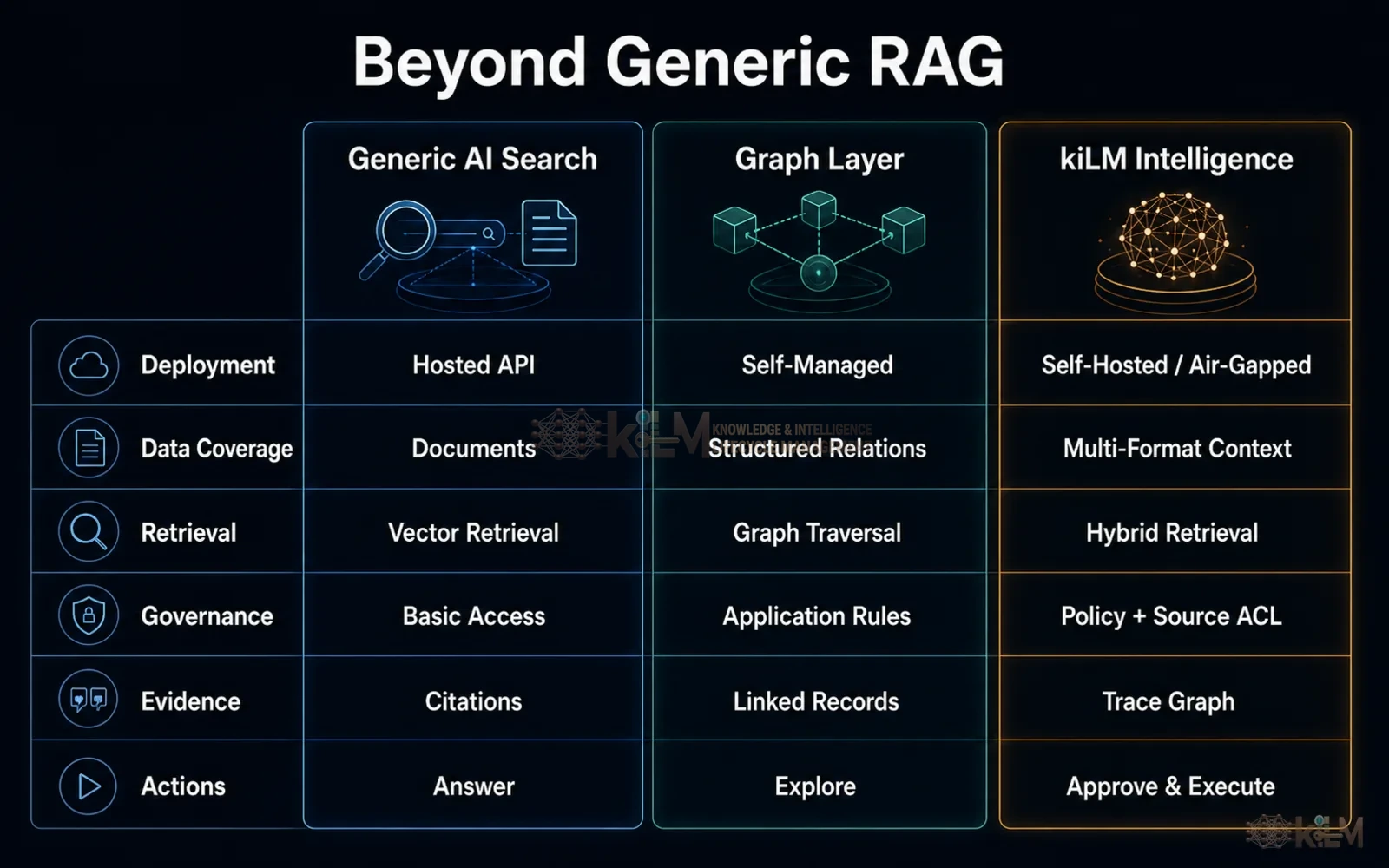
Grounded Chat Answers cite data, settings, metrics, and graph context
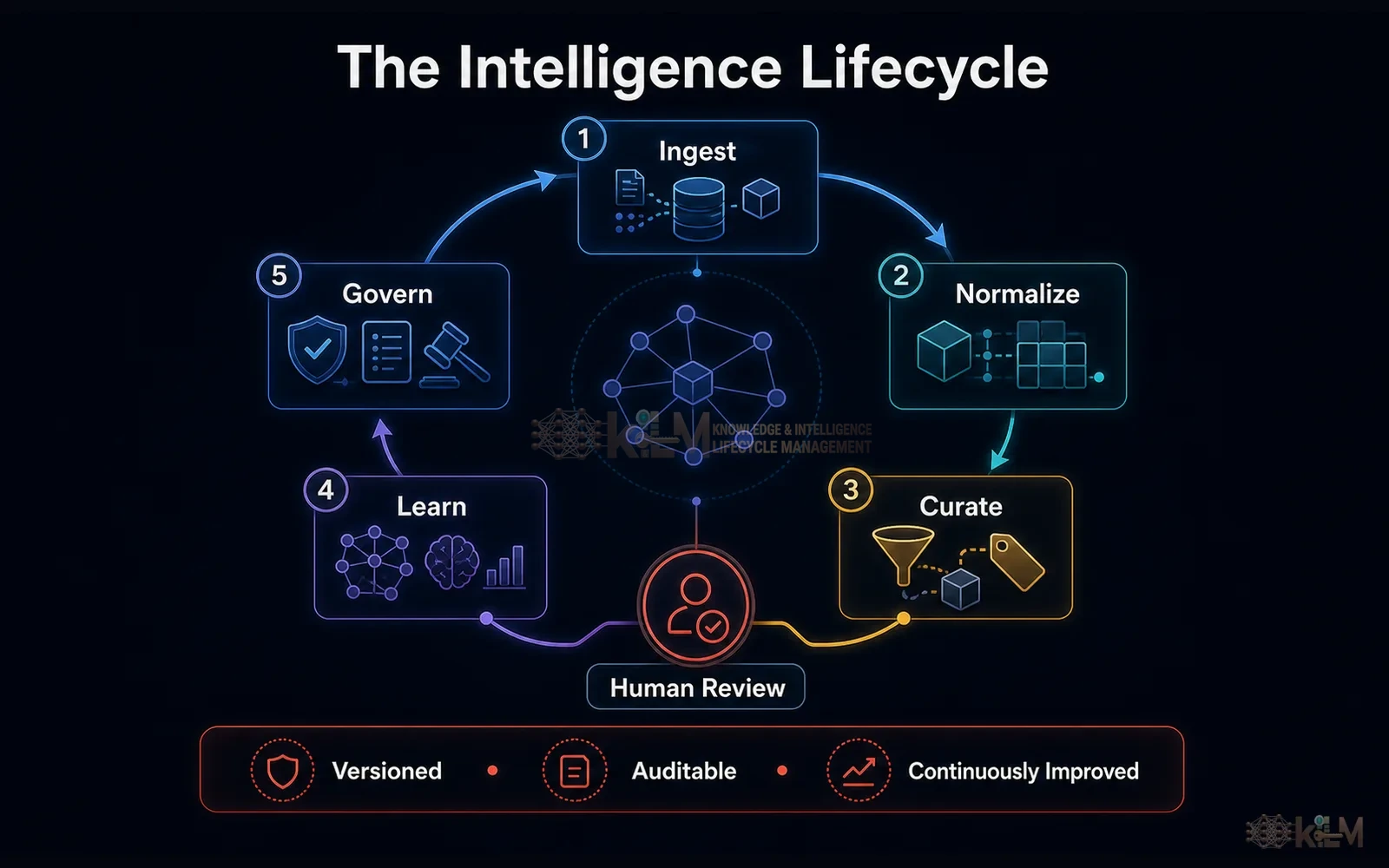
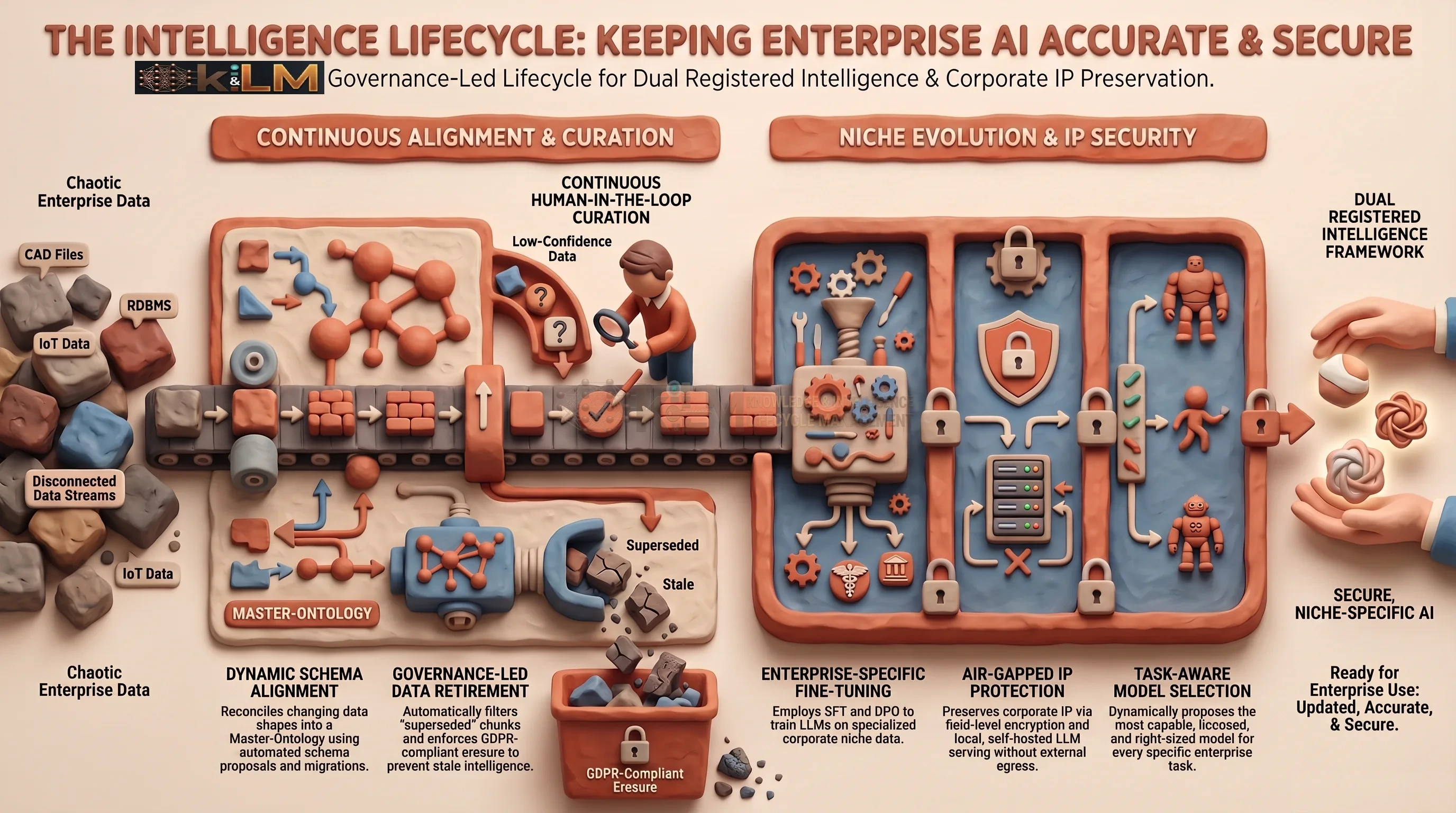
Lifecycle Governance Label, Curate, Model, Administer and Extract the Intelligence

kiLM Story

From Scattered Data to Governed Intelligence

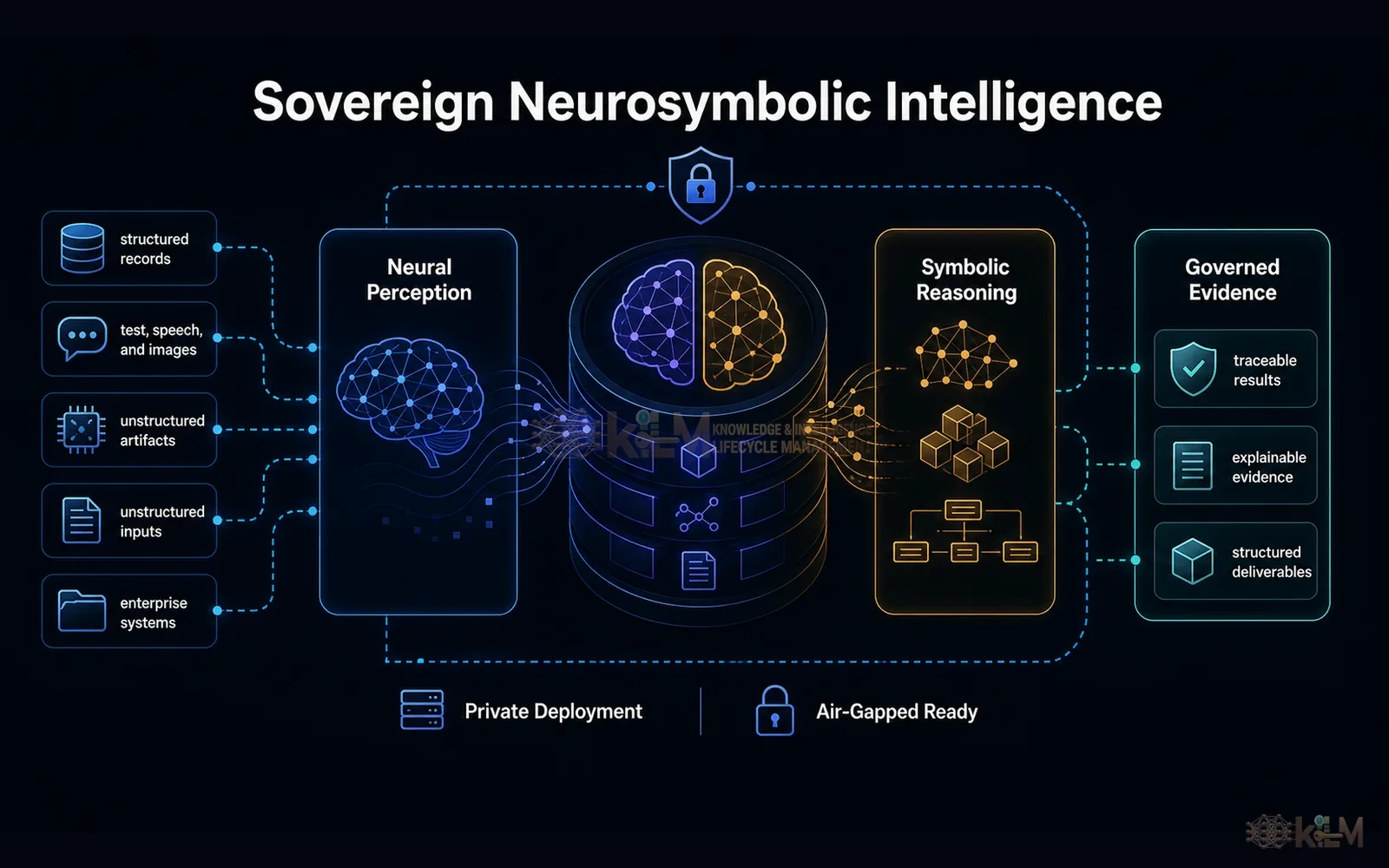
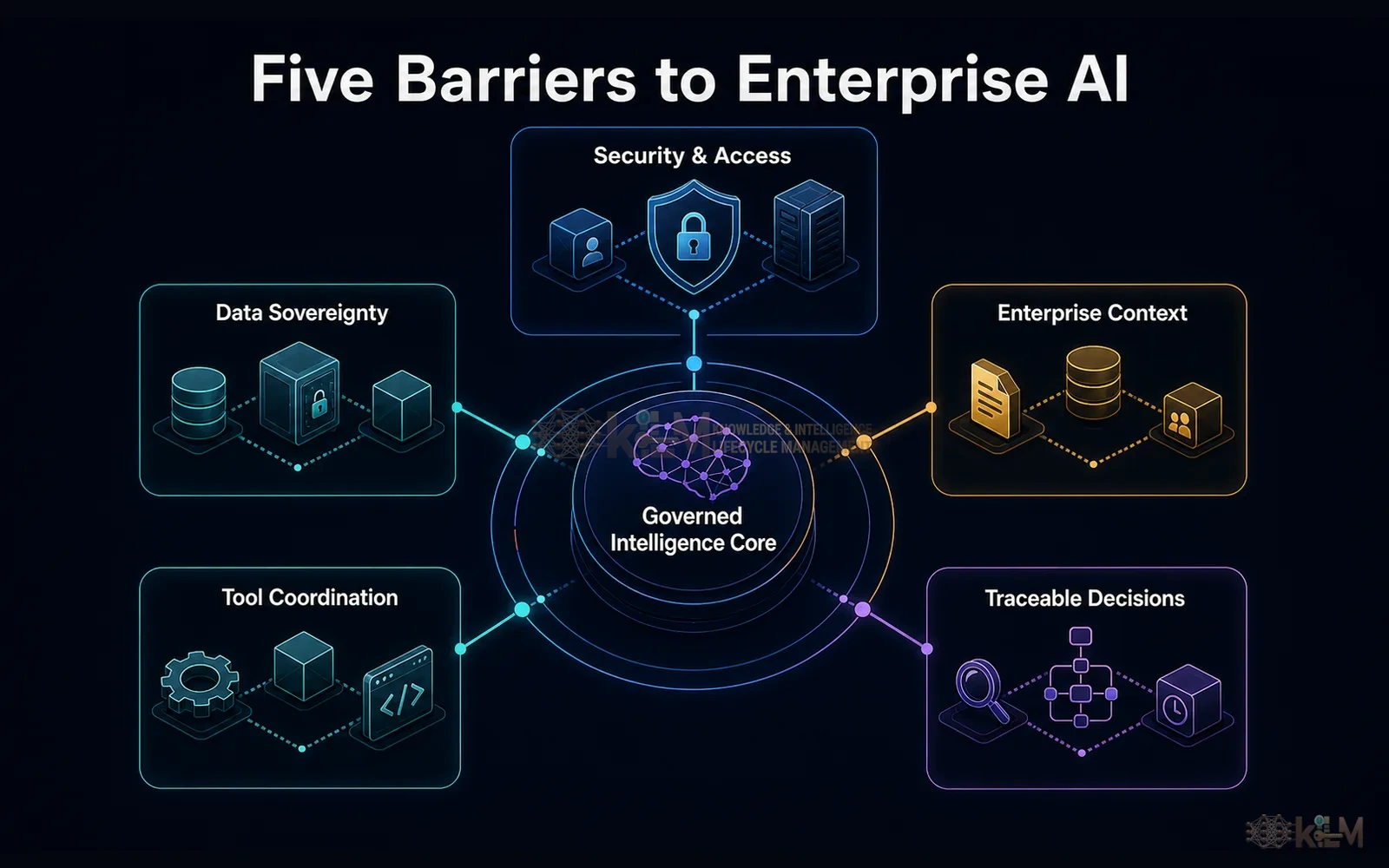
kiLM is built for data Sovereignty and Confidentiality: it runs inside your perimeter, under your Governance, so your Knowledge never leaves your control. On that foundation it applies Neurosymbolic AI — Large Language Models working with an explicit Knowledge Graph and Rules — to turn your own data into company- and domain-specific Intelligence, with every answer Traceable to its source.

kiLM — a Sovereign & Neurosymbolic AI Platform
1 / 2

Why kiLM

Why

Enterprises already own the data that answers their hardest questions. What they lack is a way to use it without handing it to someone else. kiLM makes that Knowledge usable in place — inside your perimeter, under your Governance, with every answer Traceable.

1 / 10

The Case for Owning Your Intelligence

  • Trace every answer and recommendation back to its source record — so teams can verify rather than trust.
  • Add intelligence across your existing PLM, CAD, ERP, MES and document systems, without replacing your systems of record.
  • Deploy on-premises, air-gapped, or in a dedicated cloud environment you control.
  • Use local, open-weight or approved external models according to policy — with local models, no data leaves for a third-party model.

Where it runs

Where

The same kiLM build runs in every posture. You choose the deployment your security review can defend — and you can change that decision later without re-platforming.

On-Premise

Runs entirely on your own hardware, inside your own network. Your data never crosses your boundary, and your existing identity, backup and monitoring stack stays in charge.

Best when data residency or internal policy Rules out any external hosting.
Air-Gapped

A fully offline install from a signed, verifiable bundle. Models, dependencies and container images ship with it — nothing is fetched at run time, so no outbound path is required or assumed.

Built for defense, regulated manufacturing and any environment with no egress.

Managed Service

We operate a dedicated instance for you on GCP by default (AWS or Azure on request) — single-tenant, in the region you nominate. These clouds are used only as IaaS; kiLM does not integrate with their proprietary application or AI services. You keep ownership of the data and the Model; we carry the upgrades, monitoring and on-call.

Fastest route to production when you have no capacity to run Infrastructure yourself.

Hybrid

Keep sensitive domains on-premise while less restricted workloads run in the cloud, under one control plane and one Governance Model.

Common where a single policy cannot cover every business unit.

Deployment posture is a configuration choice, not a different product. The same Core platform, license and upgrade path apply across postures; connector, model and outbound-service availability varies with the selected network policy.

How it works

Approach

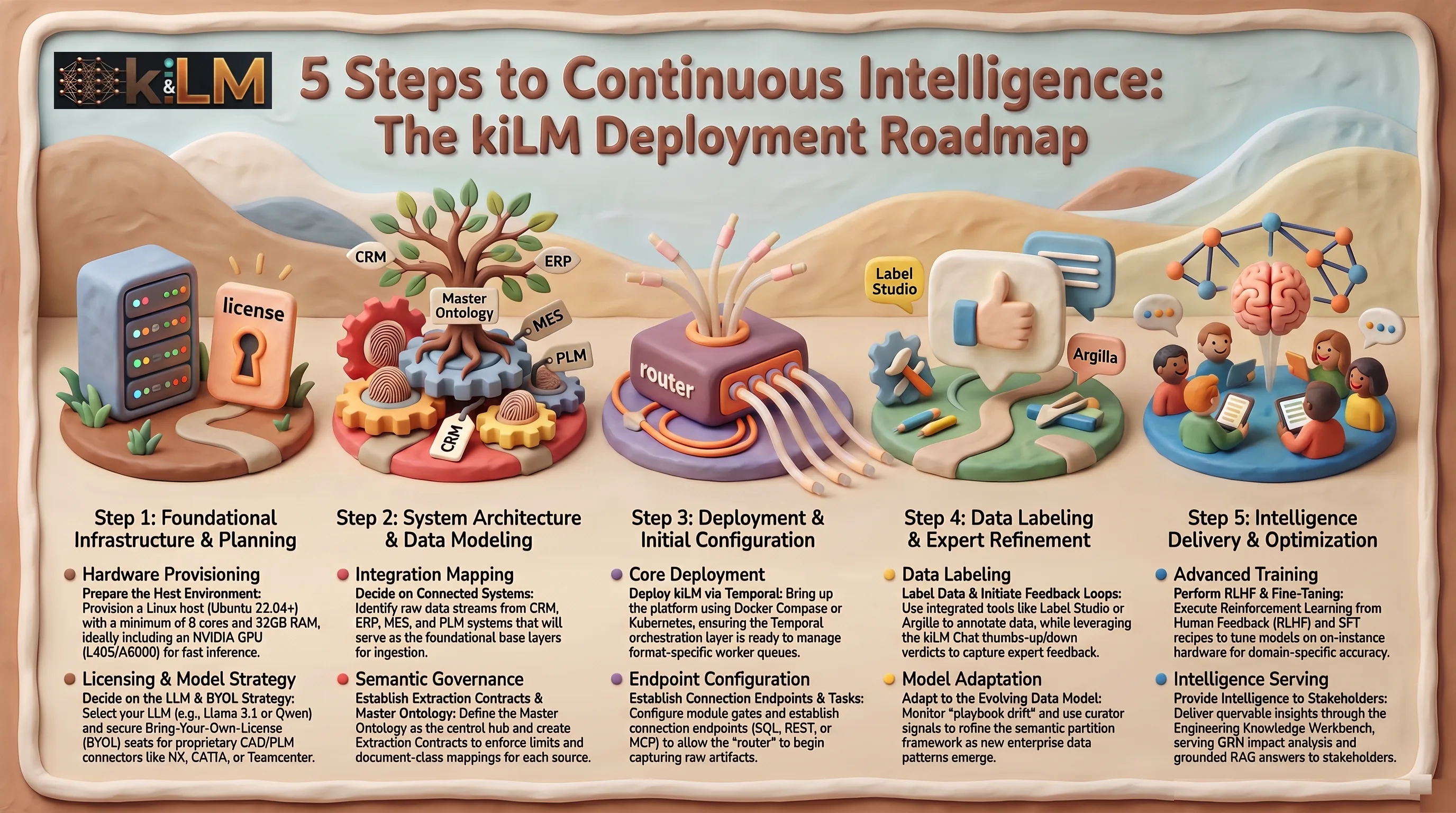
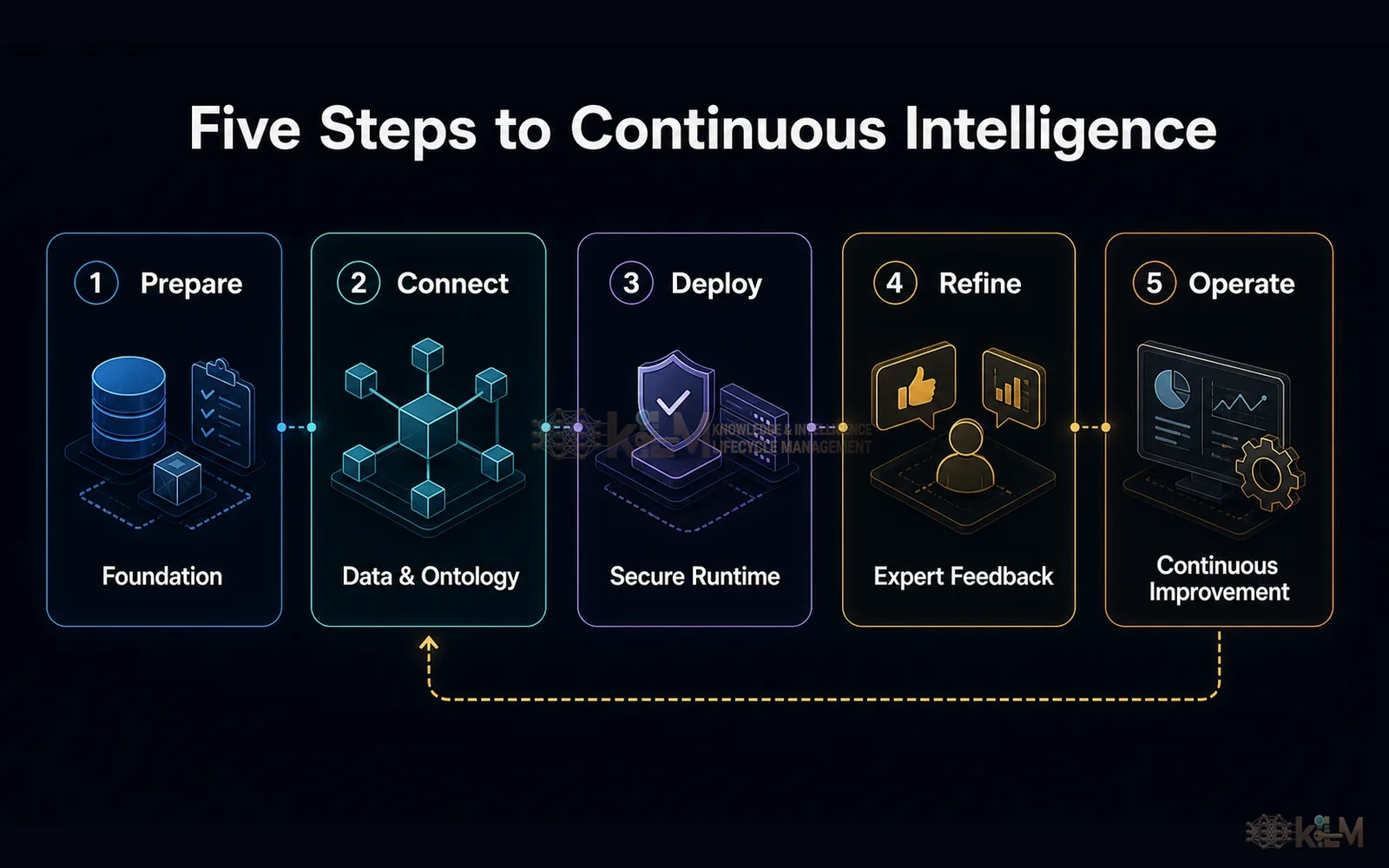
A predictable path to a Governed Knowledge Engine: size the Models and Licenses, define the Ontology and Extraction Contracts, connect your Systems, Extract and Fine-Tune, then Operate and Curate.

kiLM approach — overview
1 / 2
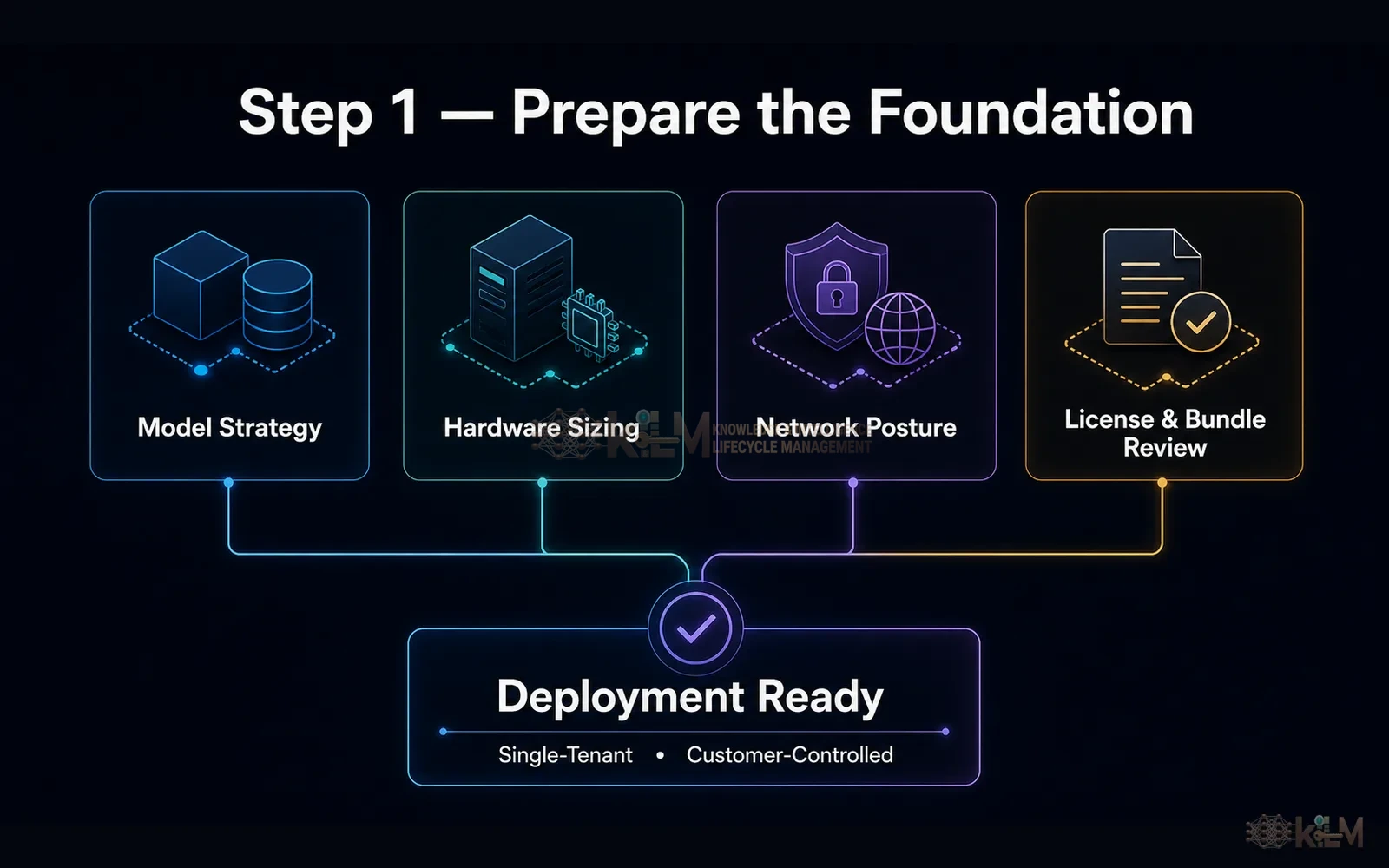
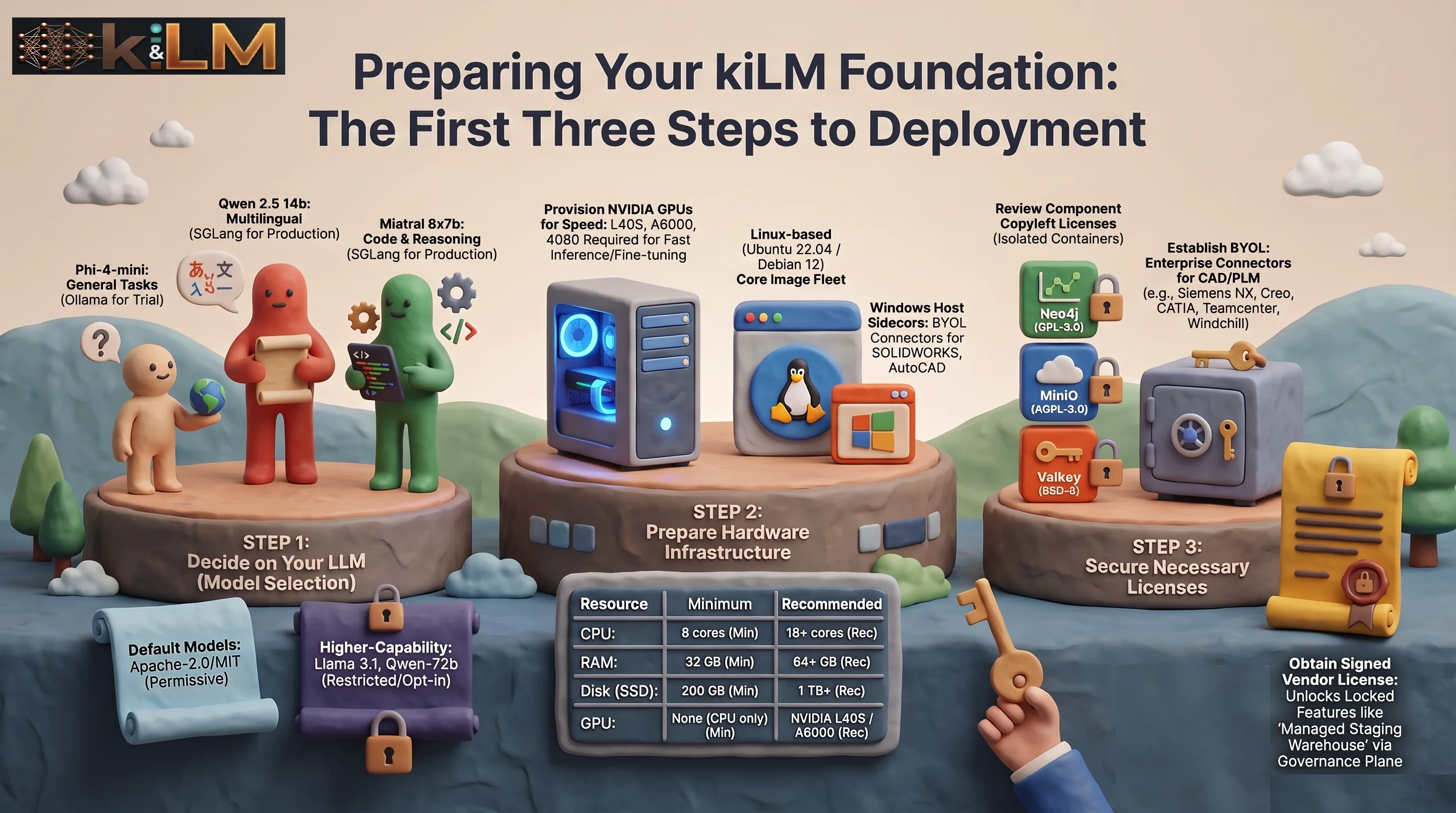
  1. Step 1 — Decide LLM Tier, Prepare Hardware & Procure kiLM Licenses

    1 / 2
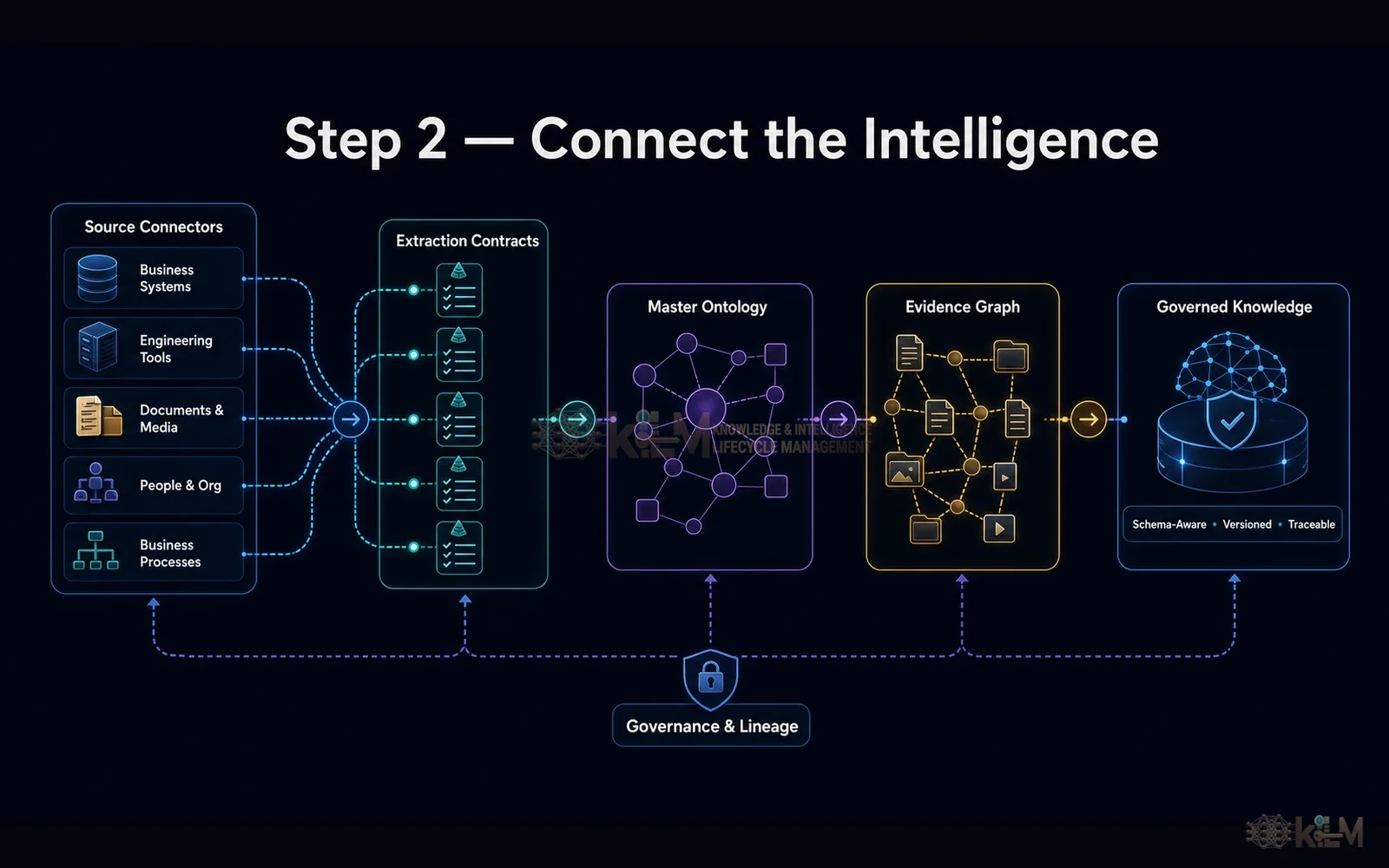
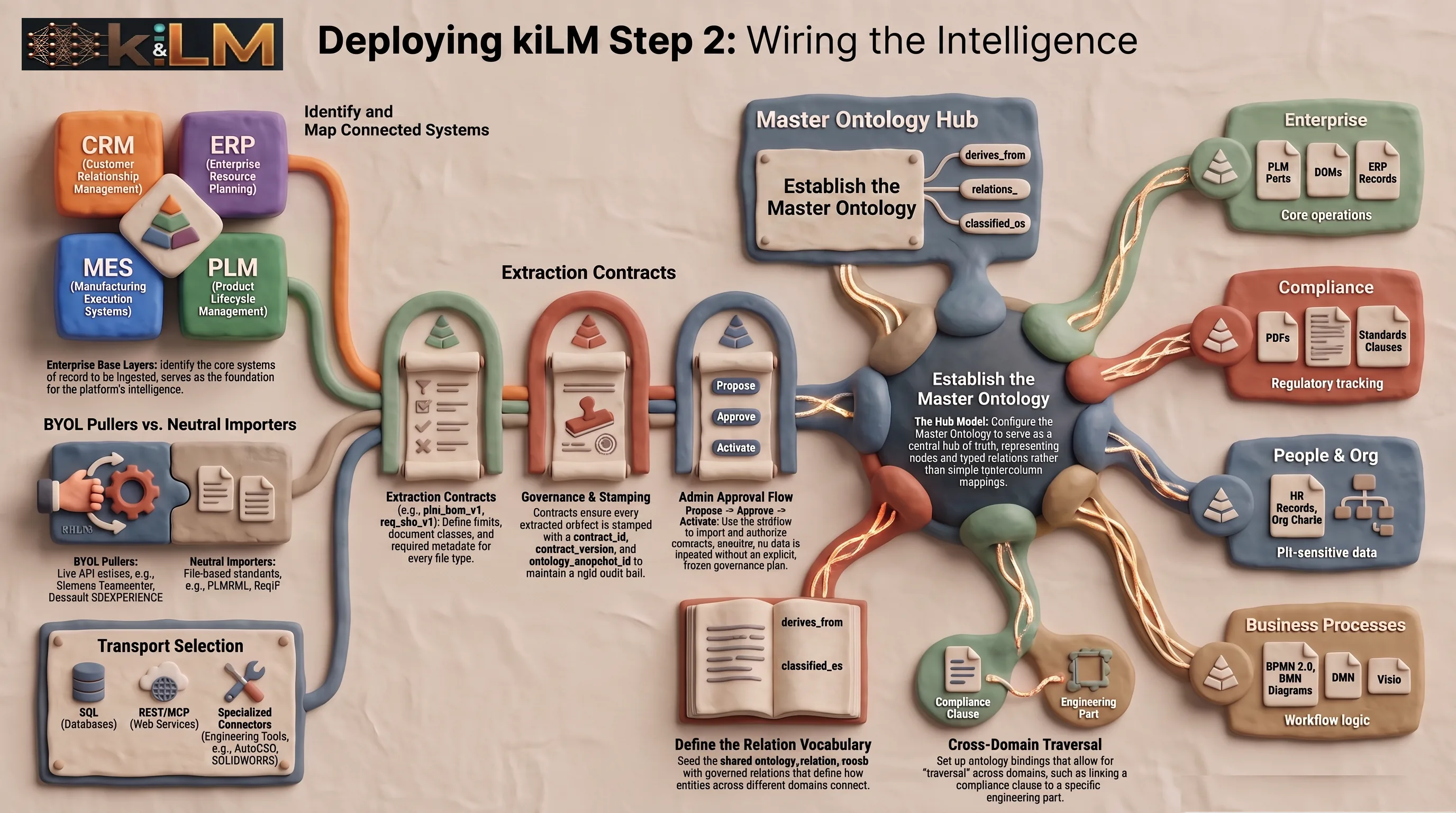
  2. Step 2 — Define Draft Master Ontology & Extraction Contracts per System

    1 / 2
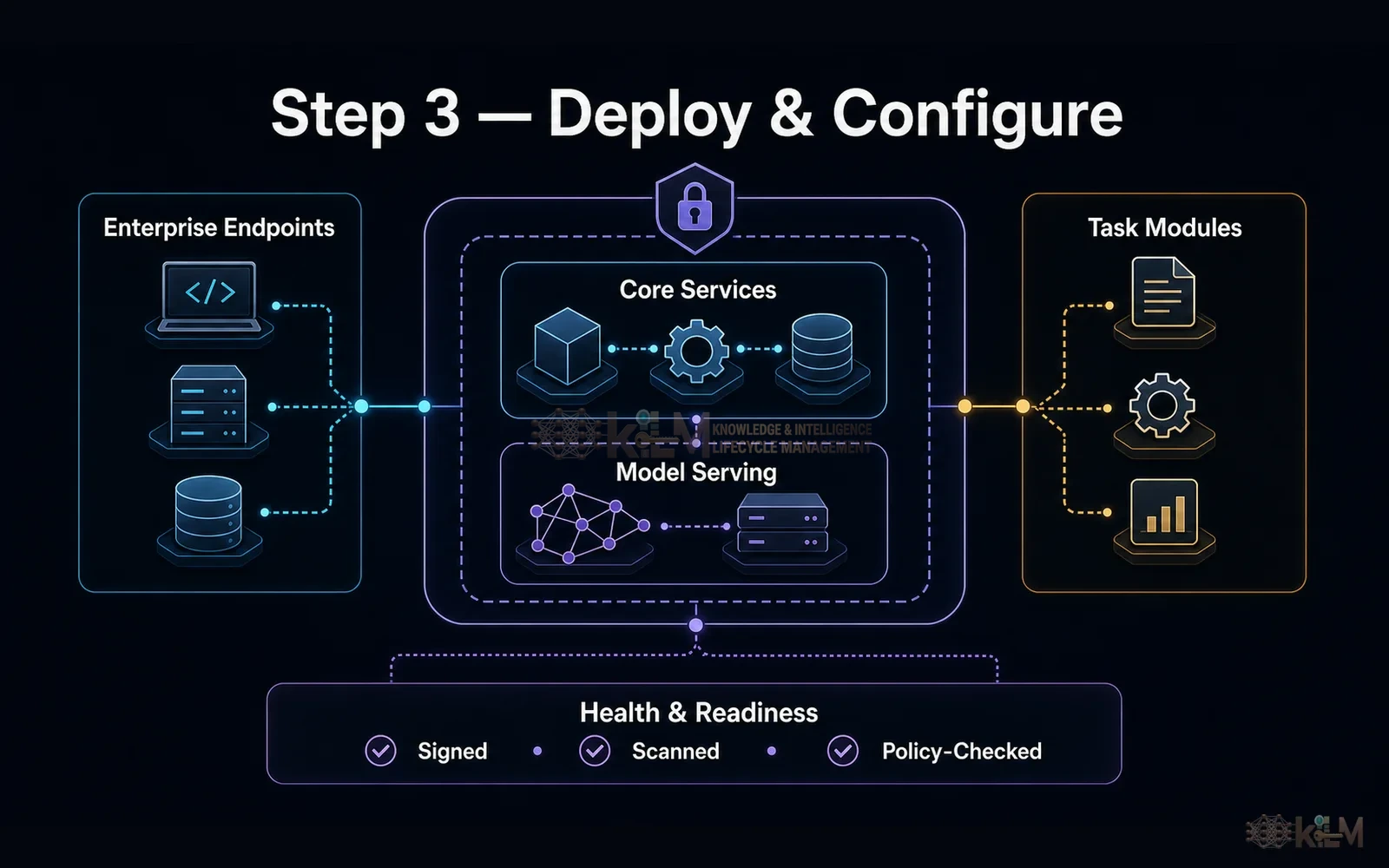
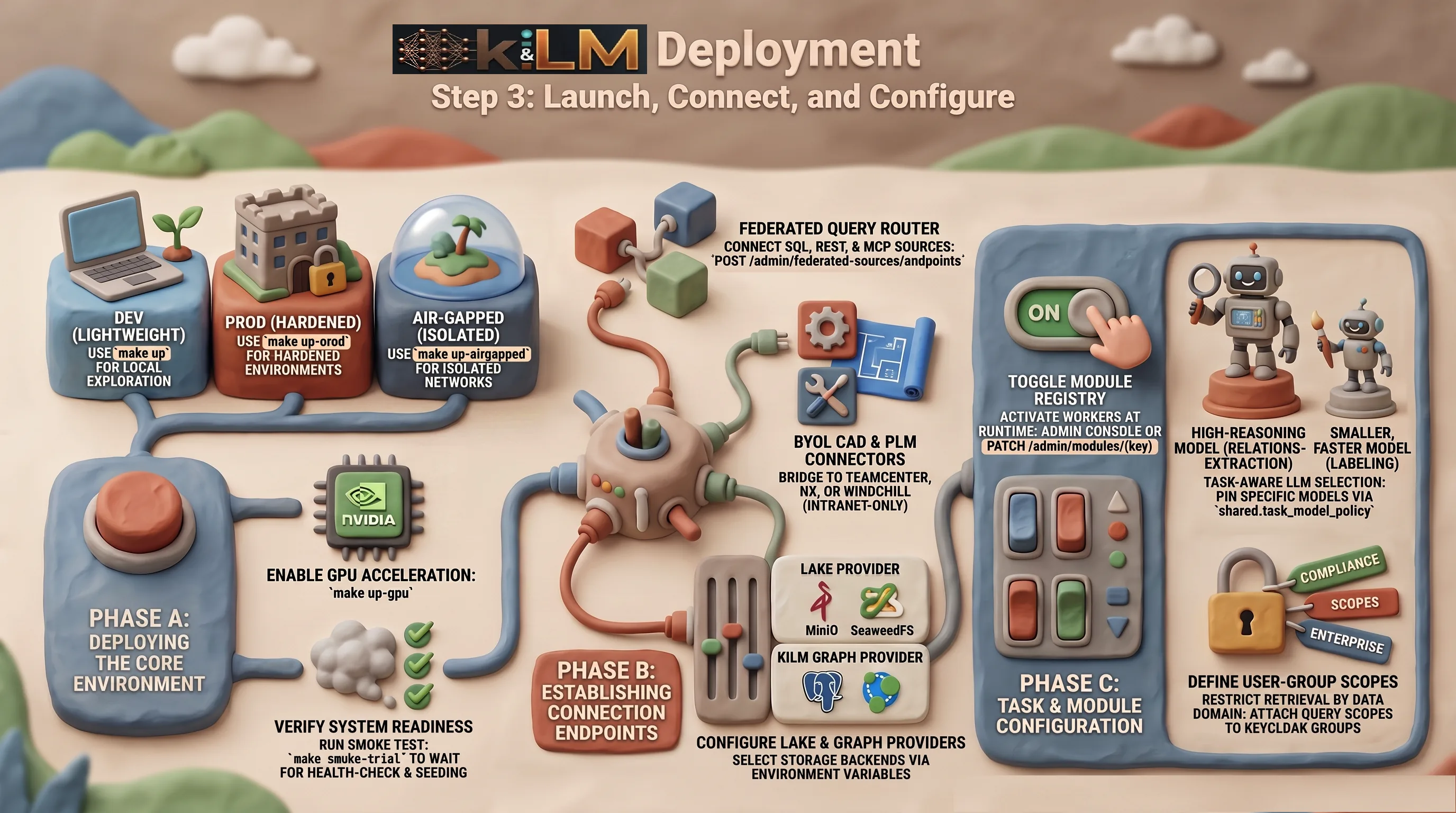
  3. Step 3 — Enable kiLM Connectors to your Systems

    1 / 2
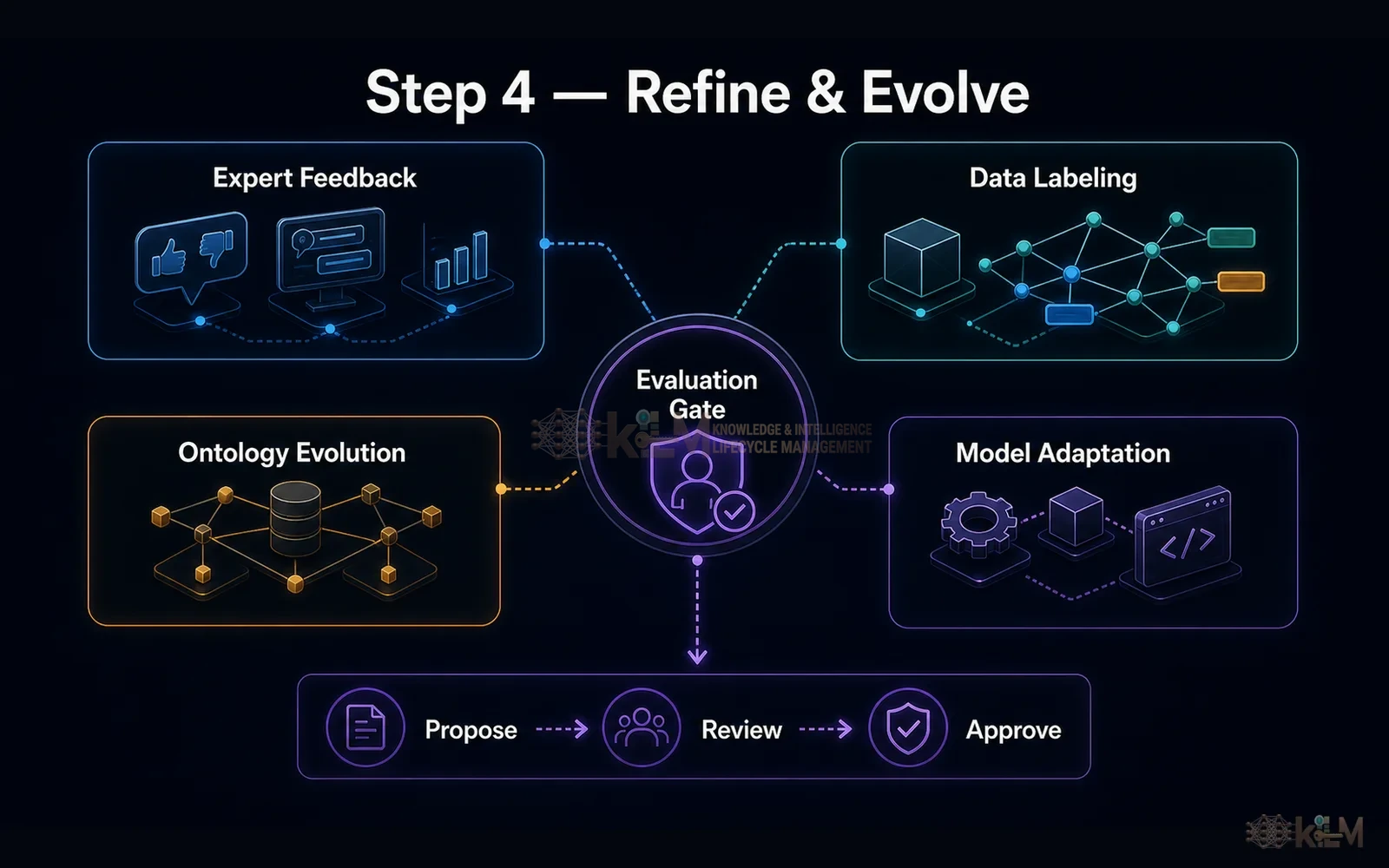
  4. Step 4 — Extract Intelligence, Fine-Tune

    1 / 2
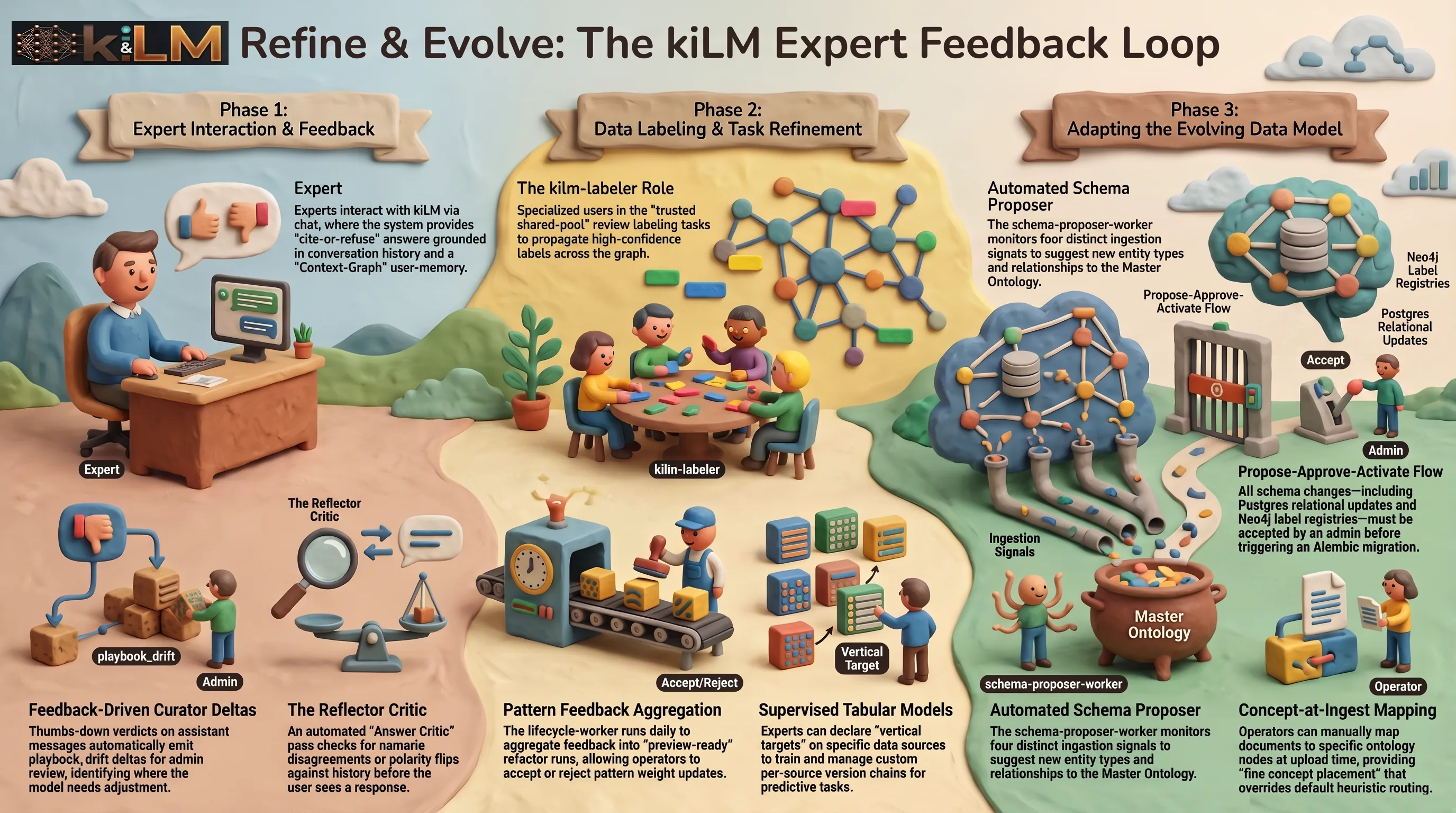
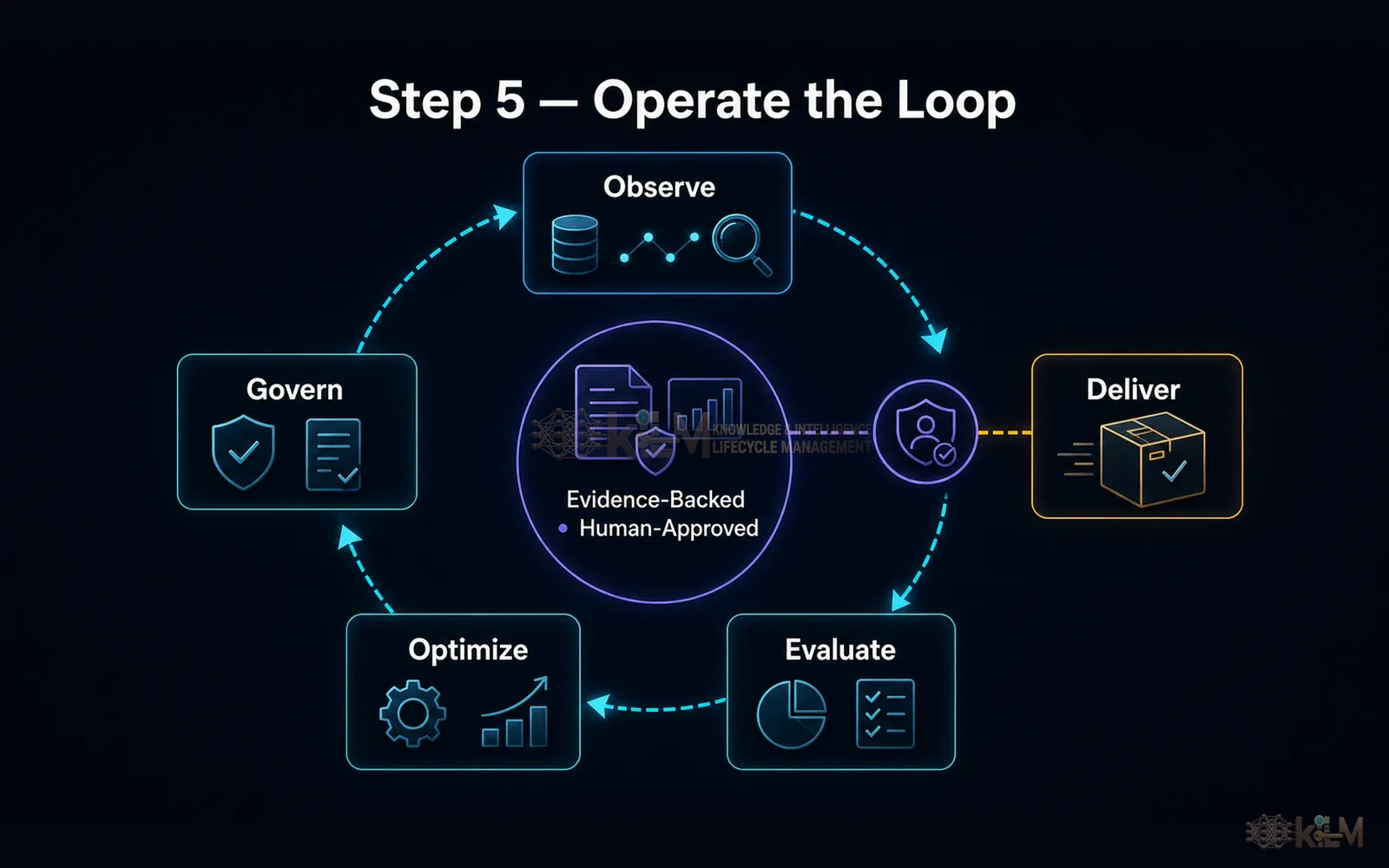
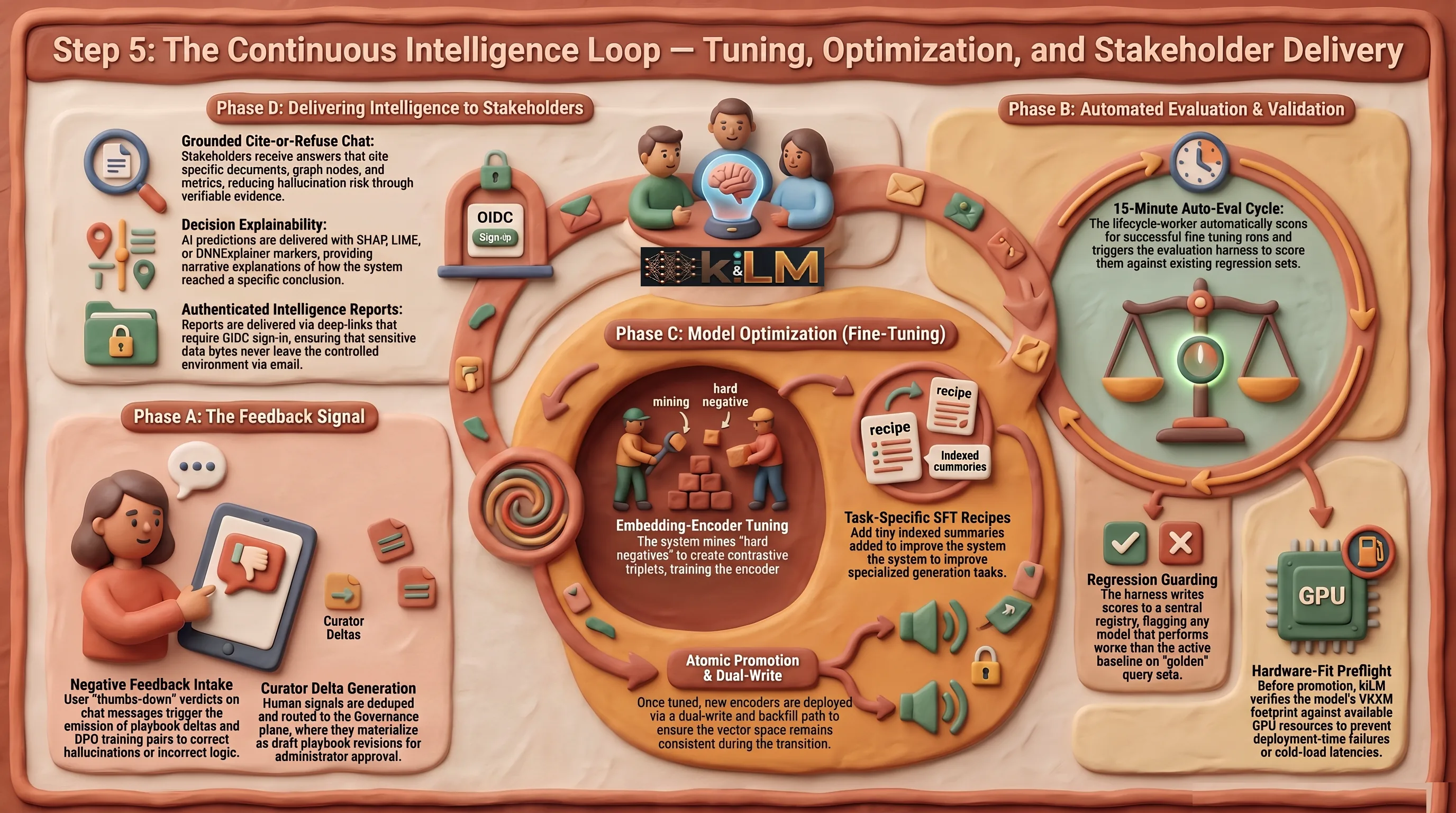
  5. Step 5 — Operate, Curate & Maintain

    1 / 2

Who it is for

Who

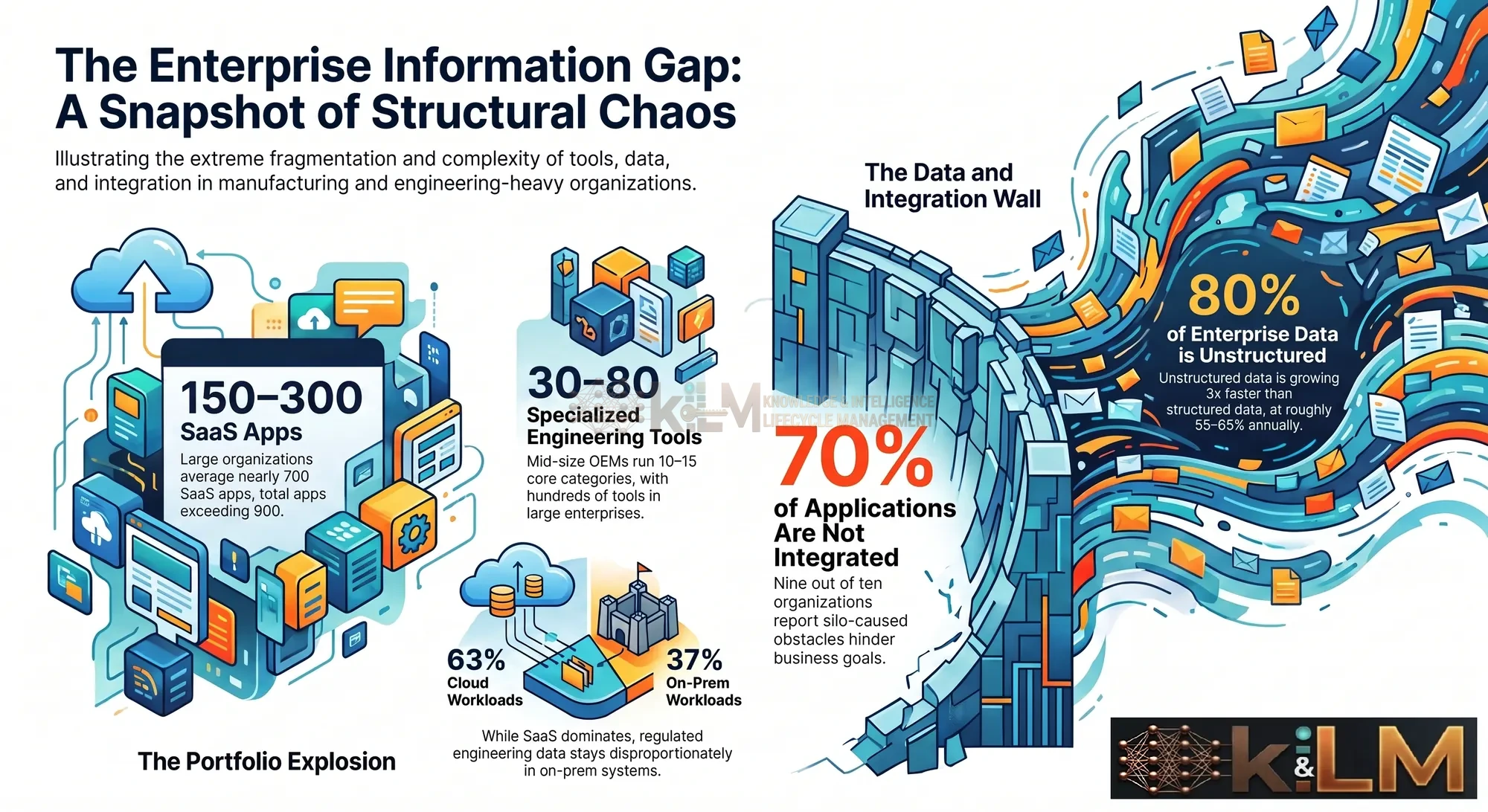
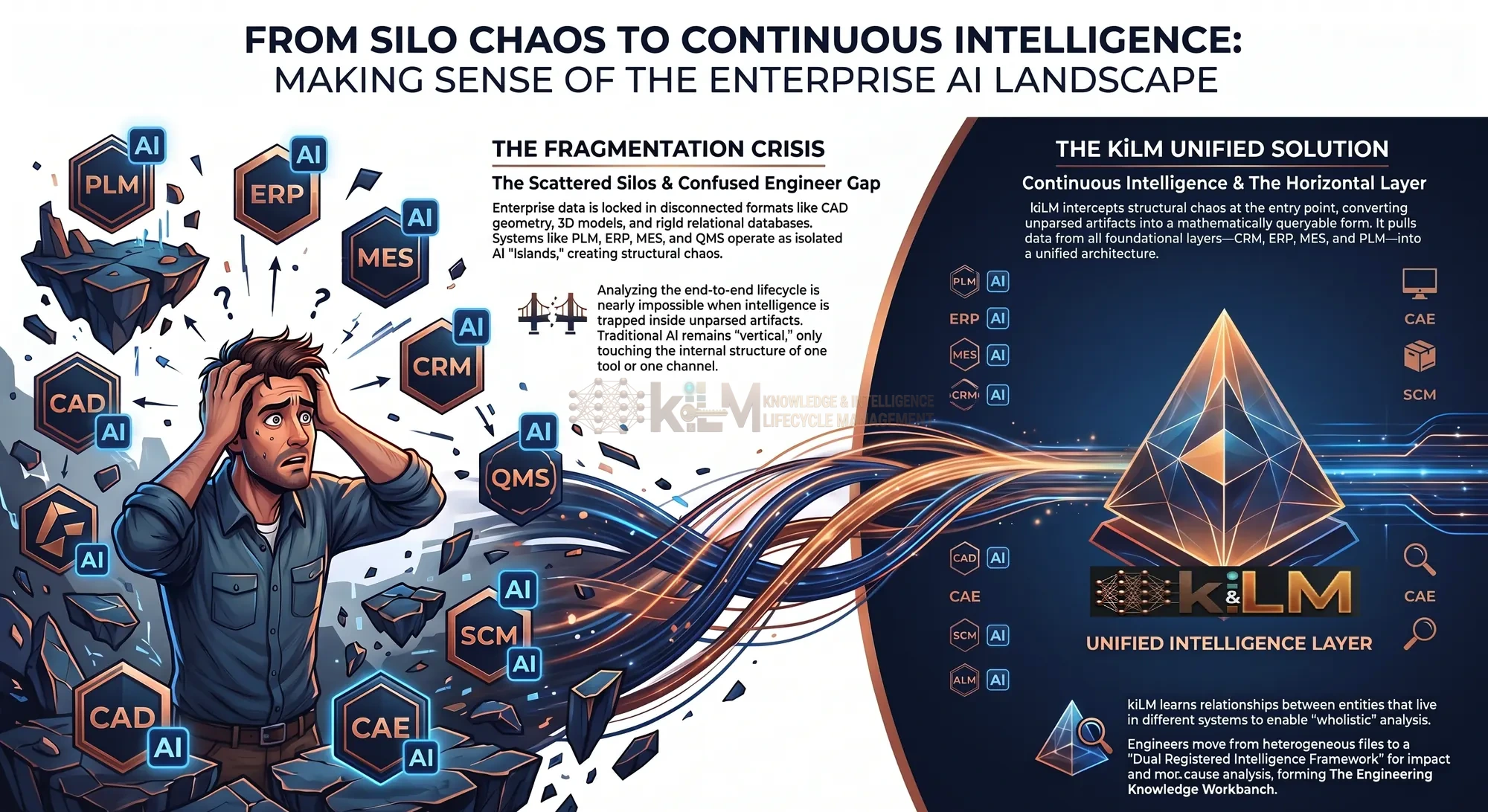
kiLM is built for organizations whose Knowledge is already scattered across Systems that will not be replaced. It is an Intelligence layer over the landscape you have — not a migration you have to fund first.

Engineering

PLM, CAD, simulation, Requirements and test results live in different tools that were never designed to answer a question together. kiLM reads across them and returns answers that cite the part, the revision and the document they came from.

Manufacturing

MES, quality records, maintenance logs and shop-floor telemetry hold the answer to most recurring failures. Making that history searchable turns tribal Knowledge into something a new engineer can query on their first week.

Supply Chain

Supplier documents, certificates, contracts and change notices decide whether you can ship. kiLM links them to the parts and programmes they govern, so an exposure question takes minutes instead of a week of email.

Any Enterprise

The pattern generalises: wherever decisions depend on Knowledge spread across Systems of record that cannot be consolidated, an Intelligence overlay is cheaper, faster and far less disruptive than another consolidation programme.

A strong fit when

  • Your Knowledge sits in Systems you cannot or will not replace.
  • Answers must be Traceable to a source record, not merely plausible.
  • Data residency, export control or customer contracts rule out public AI services.
  • The people who held the context are retiring or have already left.

Probably not yet when

  • Your content lives in one system that already searches it well.
  • A public chat assistant already meets your Governance Requirements.
  • There is no owner for data quality — no tool substitutes for that.

Why now

When

Now. Sovereign AI is not a capability you can acquire at short notice — it is accumulated. The organizations that will have it in three years are the ones building the foundation this year.

  1. The Knowledge is leaving

    Experienced engineers are retiring faster than they are being replaced, and the context they hold was never written down. Every year it is not captured, the reconstruction cost rises and some of it becomes unrecoverable.

  2. Dependency compounds quietly

    Each workflow built on an external Model is one more thing whose price, Terms and behaviour someone else controls. That dependency is easy to add and expensive to unwind — and it is cheapest to avoid before it is load-bearing.

  3. Regulation is arriving, not receding

    Data residency, auditability and AI accountability Requirements are tightening across every major market. Building for them now is ordinary engineering; retrofitting them under a deadline is not.

  4. The groundwork takes time

    Ontologies, Extraction Contracts, access policy and curated feedback are earned over months of real use. Starting now means having them when they matter — no amount of budget compresses that later.

Start small if you must: one domain, one team, one governed corpus. What matters is that the foundation is yours, and that it starts accumulating.

Request a License or Demo

Tell us what environment you are evaluating. The form prepares a local request summary and email handoff without sending data to a third-party service.

Preferences saved on this device.